


What Happens If You Refuse a Breath or Blood Test During a DUI Stop?
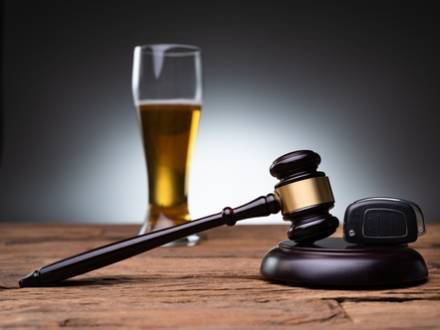 Refusing a breath or blood test during a DUI stop in Maryland triggers automatic penalties under Maryland's implied consent law and can also be used against you in court. However, that does not mean your case is unwinnable. If you are facing charges in 2026, our Annapolis DUI defense lawyers can help you understand the charges and how to fight them, with or without chemical tests as evidence.
What Is Maryland's Implied Consent Law?
Maryland's implied consent law is found in Maryland Transportation Code § 16-205.1. It says that any person who drives a motor vehicle on a Maryland road is considered to have consented to a breath or blood test if a police officer has reasonable grounds to believe that person is driving while impaired.
This consent is not something you actively give. It is automatic. The moment you get behind the wheel and drive on Maryland roads, the law treats you as having agreed to be tested if you are stopped under suspicion of DUI.
What Are the Immediate Consequences of Refusing a Breath Test in Maryland?
The moment you refuse a breath or blood test, the officer will confiscate your driver's license. You will be given a temporary paper license that allows you to drive for a limited period of time. After that period ends, your license will be suspended unless you take action.
For a first refusal, the suspension is 270 days. For a second or subsequent refusal, the suspension is two years. These suspensions are administrative, meaning they come from the Maryland Motor Vehicle Administration and are completely separate from any criminal DUI case. Even if the DUI charge is later dropped or you are found not guilty, the administrative suspension for refusal can still stand.
Can You Challenge the License Suspension After Refusing a Breath Test in Maryland?
You have the right to request a hearing with the Office of Administrative Hearings to fight the suspension. The deadline to request this hearing is critical. You must make the request within 10 days of the date of your arrest. If you miss that window, you lose the right to contest the suspension, and it goes into effect automatically.
At the hearing, the issues are narrow. The hearing officer will look at whether the officer had reasonable grounds to believe you were impaired, whether you were properly advised of the consequences of refusal, and whether you actually refused. If any of those elements cannot be established, the suspension may not hold. An attorney can represent you at this hearing and make arguments on your behalf.
Can Refusing a Breath Test During a DUI Stop Be Used Against You in MD Court?
In Maryland, a prosecutor can tell the jury that you refused to take the test. Prosecutors often argue that refusal shows a consciousness of guilt, meaning you knew you were impaired and did not want the test to prove it. This argument can be compelling to a jury, depending on the circumstances. However, a skilled defense attorney will address this directly and work to minimize the impact of the refusal on your case.
What Penalties Come With a DUI Conviction in Maryland?
Even without a chemical test result, a DUI charge in Maryland can lead to serious consequences if you are convicted. A first-offense DUI can result in up to one year in jail and a fine of up to $1,000.
A DWI, or driving while impaired, carries lighter penalties than a full DUI but still results in points, fines, and potential jail time. Subsequent offenses carry significantly harsher penalties, including longer jail sentences, higher fines, and the possibility of ignition interlock device requirements.
Beyond the court-imposed penalties, a DUI conviction affects your insurance rates, your employment, your professional licenses, and your reputation. Treating the charge seriously from the beginning is the only way to protect yourself from these long-term consequences.
What Defenses Are Available in a Refusal DUI Case in Maryland?
Just because you refused a test does not mean you have no defense. In fact, several strong defenses can apply in a case built without a chemical test result.
The Reason for the Stop
Your attorney will start by looking at whether the officer had a valid reason to stop you in the first place. If the stop was not legally justified, any evidence gathered during it may be suppressed.
Explaining the Consequences
Your attorney will also look at whether the officer properly advised you of the consequences of refusal before you declined the test. If that information was not properly given, your refusal may not be valid for license suspension purposes.
Field Sobriety Test Reliability
Field sobriety tests are another area where a case can be challenged. These tests are affected by many things that have nothing to do with impairment, including medical conditions, nervousness, poor road conditions, and improper administration by the officer.
Your attorney will examine every step of the stop, the field tests, and the arrest to find weaknesses in the prosecution's case.
Contact Our Anne Arundel County DUI Defense Attorneys Today
Refusing a breath or blood test sets several legal processes in motion at once, and handling them correctly requires experience and speed. The ten-day deadline to request a hearing alone is reason enough to get an attorney involved right away. At Henley & Henley, Attorneys at Law, our firm brings over 50 years of combined legal experience to every DUI case we handle. We know Maryland's DUI laws inside and out, and we know how to build a strong defense whether or not there is a chemical test result in the case.
Call 410-280-0530 today to speak with an Annapolis DUI defense lawyer and protect your license and record.
Need Help? Hire an Attentive Team to Defend Your Rights

Our law firm has offices in Annapolis and Centreville, and we provide legal services to clients throughout Maryland, including Crofton, Severn, Arnold, Millersville, Glen Burnie, Pasadena, Severna Park, Odenton, and Linthicum Heights.
Results listed are not a guarantee or indication of future case results.
©2026 Henley & Henley, Attorneys at Law

